AI insight extraction
Reading article context…
Key takeaways
- The starting price in a comparison table tells you almost nothing. Judge.me charges a flat $15/month at any size, while Loox and Okendo charge by order volume, so two apps that sit one row apart can cost you $15 or $200 at the same store.
- Judge.me is the best free app for most stores, and the best $15 app too. Its free plan has unlimited reviews, photos, and video, and the paid tier is a flat fee that never scales with your orders.
- Pay by how the app bills, not by the headline number. Flat-fee apps (Judge.me, Junip) win as you grow; order-billed apps (Loox, Okendo, Growave) win while you are small and get expensive fast.
- A review app makes you eligible for Google stars, it does not guarantee them. Product rich results, Google Shopping ratings, and Google Seller Ratings are three separate systems, and no app controls whether Google shows the stars.
- Your reviews are portable, but not everything survives the move. Star ratings and text migrate cleanly; photos, review dates, and verified-purchase badges often do not, which is the real reason stores feel locked in.
- Shopify’s own Product Reviews app is gone. It was retired in 2024, it is not the same as Shop reviews, and any 2026 guide still recommending it is out of date.
Most guides to Shopify review apps will tell you Judge.me is cheap, Loox is pretty, and Yotpo is for big brands. That is true, and it is not the thing that will cost you money.
Here is the thing. The cheapest review app at 50 orders a month is almost never the cheapest at 1,000. Judge.me’s paid plan is a flat $15 no matter how big you get. Loox starts at $49.99 and climbs with your order count. Okendo jumps from $19 to $119 the moment you pass 200 orders. These three apps sit in the same comparison tables, described with the same word, “affordable,” and they will bill you wildly different amounts for the same store.
Nobody tells you this because the billing model is boring and the starting price fits in a table cell. So this guide leads with it. We checked current pricing on the Shopify App Store on 27 October 2026, worked out what each app actually costs at 100, 500, 1,000, and 5,000 orders a month, and used that to say which app fits which store. RightCadence sells lifecycle marketing, not a review app, so we have no app to push to the top.
Best Shopify review apps at a glance
If you want the answer without the reasoning, start here. Each pick is explained in full below.
- Best for most stores, and best free plan: Judge.me. Unlimited reviews and photos free, a flat $15/month to unlock the rest, 5.0 stars across more than 48,000 reviews.
- Best for visual, DTC, Instagram-style brands: Loox. Photo and video galleries that sell, at an order-based price that is fine while you are small.
- Best for growing brands on Klaviyo: Okendo. Rich review attributes and deep Klaviyo data, priced by order band.
- Best for large or complex setups: Yotpo. The most features and integrations, and the most to manage and pay for.
- Best flat pricing as you scale: Junip. Clean experience, unlimited orders on every tier, so the price does not move when your traffic does.
- Best for importing reviews (dropshipping): Opinew or Rivyo. Pull existing reviews from Amazon, AliExpress, and eBay.
- Best if you want reviews plus loyalty in one app: Growave. Reviews, a points program, and a wishlist on a single bill.
- Best if reviews are one tool among many: Vitals. Reviews bundled into a 40-plus tool conversion suite for one flat fee.
Pro tip: Before you install anything, count your orders from last month. That single number decides more about your real cost than any feature on any table below.
How review apps bill, and why it breaks every comparison
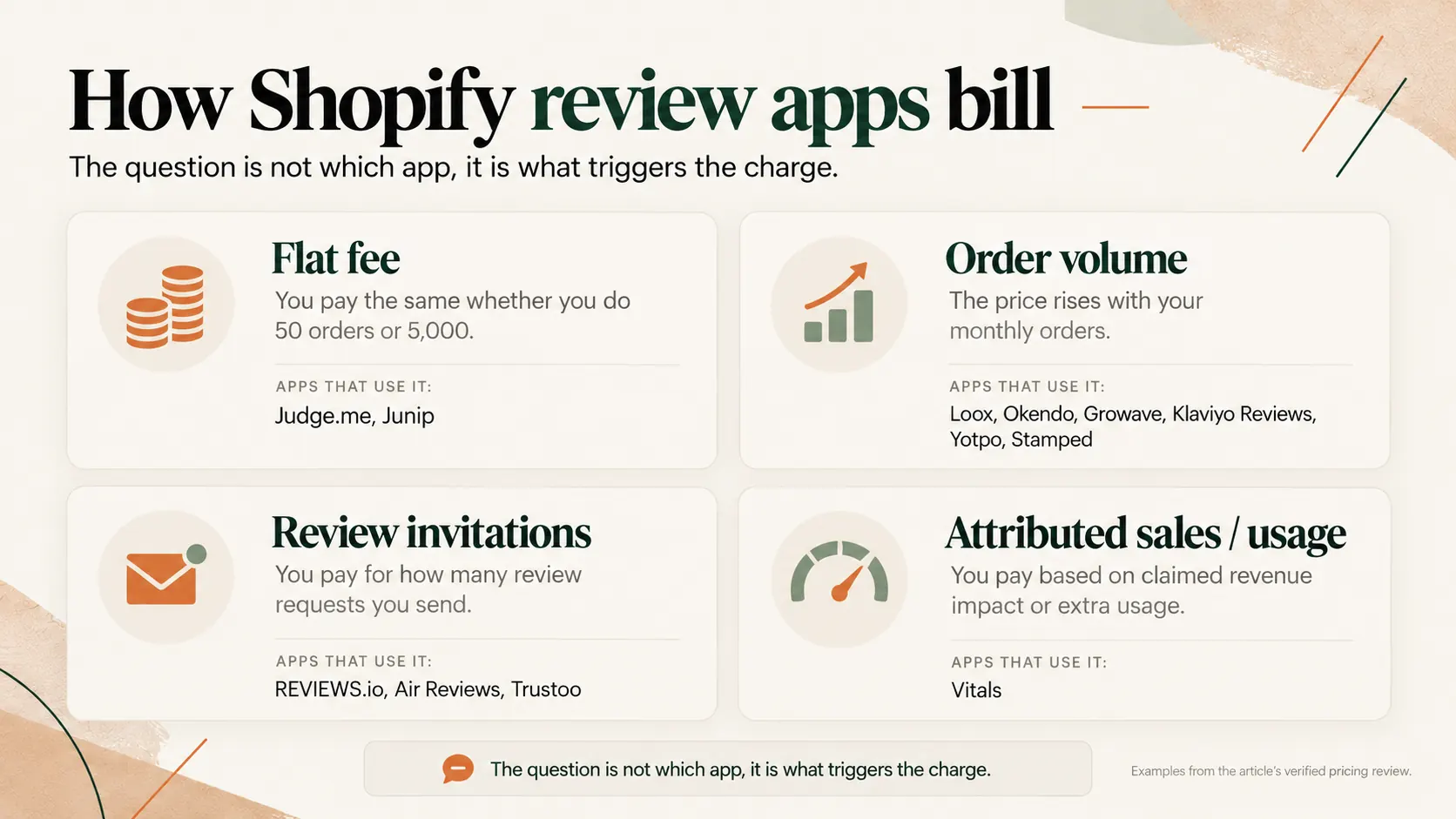
The first question is not “which app,” it is “what triggers the charge.” There are four billing models, and an app’s model matters more than its starting price.
- Flat fee. You pay the same whether you do 50 orders or 5,000. Judge.me ($15/month) and Junip ($29 to $299 by feature tier) work this way. Predictable, and increasingly cheap as you grow.
- Order volume. The price rises with your monthly orders. Loox, Okendo, Growave, and Klaviyo Reviews work this way. Cheap at the start, and the bill climbs with your success.
- Review invitations. You pay for how many review requests you send, not how many orders you take. REVIEWS.io works this way, which suits stores that email selectively.
- Attributed sales or usage. You pay based on revenue the app claims credit for, or on storage and sends. Vitals adds usage fees above roughly $1,000/month in attributed sales.
The reason this matters: an order-billed app and a flat-fee app can trade places completely as you grow. At 100 orders a month, Loox at $49.99 looks expensive next to Judge.me at $15. That gap only widens, but an order-billed app like Okendo that starts at $19 will pass Judge.me’s flat $15 the moment you cross its first order band, and keep going. The cost-at-volume table below shows exactly where the lines cross.
Pro tip: If you expect to grow fast, weight flat-fee apps heavily. You are choosing a bill for two years from now, not for this month.
The full comparison table (all 15)
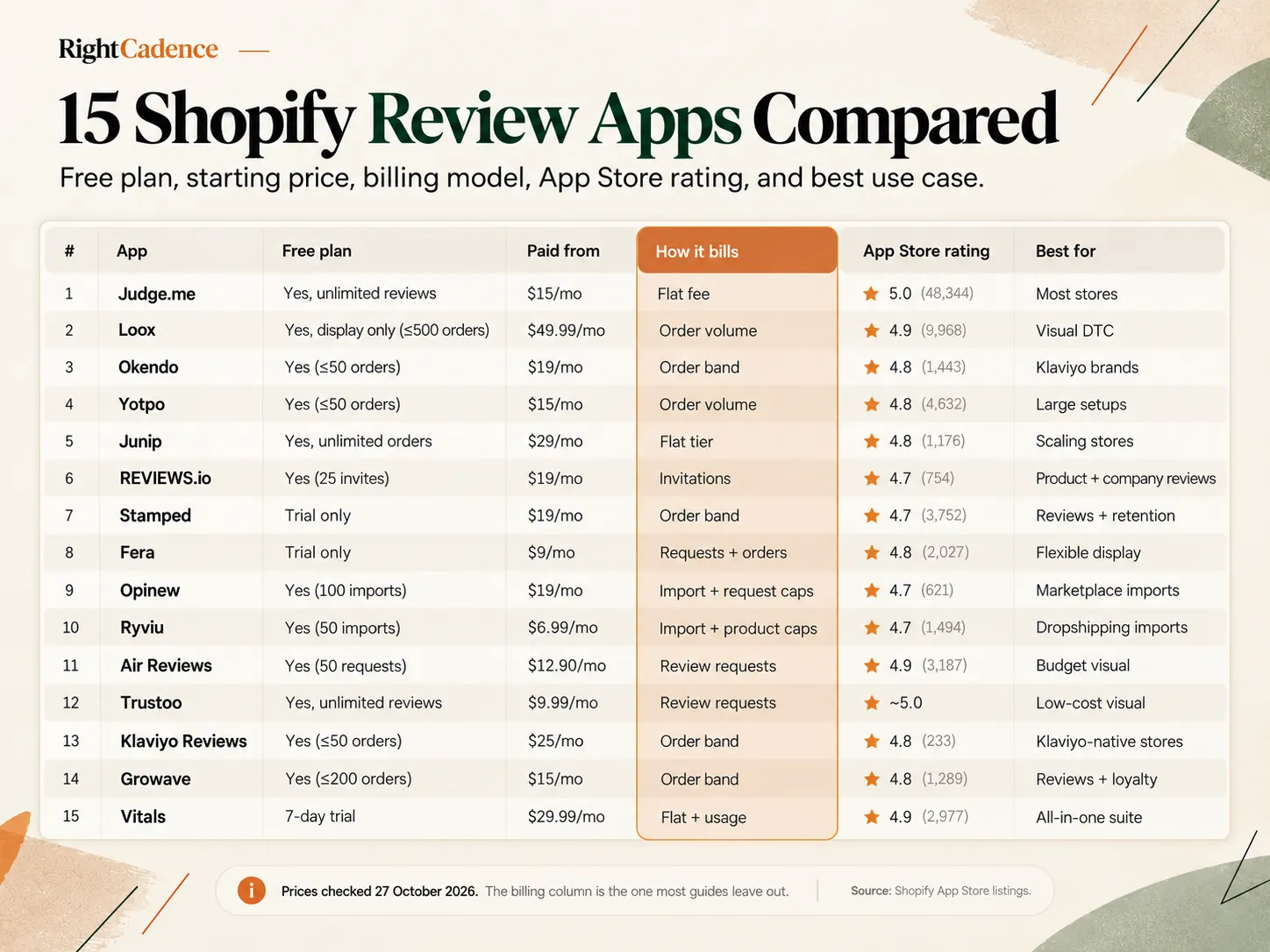
Prices and ratings checked on the Shopify App Store, 27 October 2026. “How it bills” is the column most tables omit and the one that decides your real cost. Verify every price on the live listing before you commit, since plans change often.
| App | Free plan | Paid from | How it bills | App Store rating | Best for |
|---|---|---|---|---|---|
| Judge.me | Yes, unlimited reviews | $15/mo | Flat fee | 5.0 (48,344) | Most stores |
| Loox | Yes, display only (≤500 orders) | $49.99/mo | Order volume | 4.9 (9,968) | Visual DTC |
| Okendo | Yes (≤50 orders) | $19/mo | Order band | 4.8 (1,443) | Klaviyo brands |
| Yotpo | Yes (≤50 orders) | $15/mo | Order volume | 4.8 (4,632) | Large setups |
| Junip | Yes, unlimited orders | $29/mo | Flat tier | 4.8 (1,176) | Scaling stores |
| REVIEWS.io | Yes (25 invites) | $19/mo | Invitations | 4.7 (754) | Product + company reviews |
| Stamped | Trial only | $19/mo | Order band | 4.7 (3,752) | Reviews + retention |
| Fera | Trial only | $9/mo | Requests + orders | 4.8 (2,027) | Flexible display |
| Opinew | Yes (100 imports) | $19/mo | Import + request caps | 4.7 (621) | Marketplace imports |
| Rivyo | Yes (100 orders + 100 imports) | $9/mo | Order volume + import caps | 4.9 (940+) | Budget imports + retention |
| Air Reviews | Yes (50 requests) | $12.90/mo | Review requests | 4.9 (3,187) | Budget visual |
| Trustoo | Yes (unlimited reviews) | $9.99/mo | Review requests | ~5.0 | Low-cost visual |
| Klaviyo Reviews | Yes (≤50 orders) | $25/mo | Order band | 4.8 (233) | Klaviyo-native stores |
| Growave | Yes (≤200 orders) | $15/mo | Order band | 4.8 (1,289) | Reviews + loyalty |
| Vitals | 7-day trial | $29.99/mo | Flat + usage | 4.9 (2,977) | All-in-one suite |
How we picked
We did not install all 15 on a demo store and crown a winner, and you should distrust any guide that claims it did across this many apps. What we did: pulled current pricing and ratings from each app’s Shopify App Store listing on 27 October 2026, mapped each app’s billing model, and cross-checked feature claims against 30 competitor guides collected the day before.
Every price in this guide was confirmed on a vendor source on 27 October 2026, and where a listing did not expose its paid tiers we used a dated pricing tracker and said so. We did not print a guess anywhere. These prices change monthly, so treat the date as the expiry, not a decoration.
Our ranking weights, roughly: what the app collects and displays (25%), real cost at 1,000 orders (20%), display and mobile experience (15%), integrations and export (15%), SEO eligibility (10%), performance (10%), and merchant evidence (5%). Every app in this guide has a store it is genuinely the right choice for, and each profile says which one.
The 15 apps, reviewed
Every profile uses the same four parts: a short introduction to the tool, its main features, its pricing, and the store it is the right fit for. Ratings and prices were checked on the Shopify App Store on 27 October 2026.
1. Judge.me
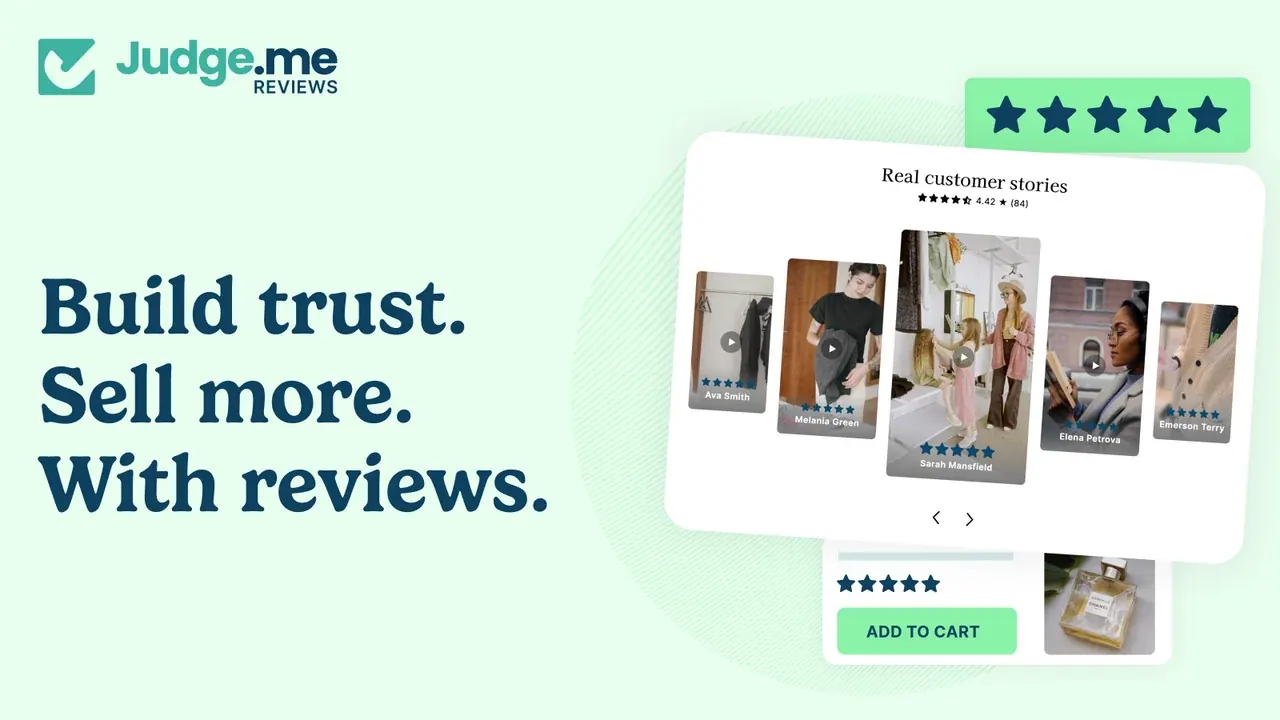
Introduction. Judge.me is the default recommendation in this category and the most installed review app on Shopify, with a 5.0 rating across more than 48,000 reviews and the Built for Shopify badge. It does everything a review app should and bills a flat fee, so the cost never grows with your store.
Features.
- Unlimited review requests by email
- Unlimited photo and video reviews
- On-site widgets: star rating, review carousel, and a full all-reviews page
- Q&A on product pages and Google reviews sync
- AI features, 130-plus integrations, coupons, and referrals (Awesome plan)
- Google Shopping product ratings (Awesome plan)
Pricing. Free forever (unlimited reviews, photos, and video), or Awesome at $15/month, a flat fee that is the same at 100 orders and at 50,000.
Best for. Almost any store that wants the full feature set and a predictable bill. The display is clean rather than lavish, so brands whose whole pitch is visual sometimes prefer Loox.
2. Loox
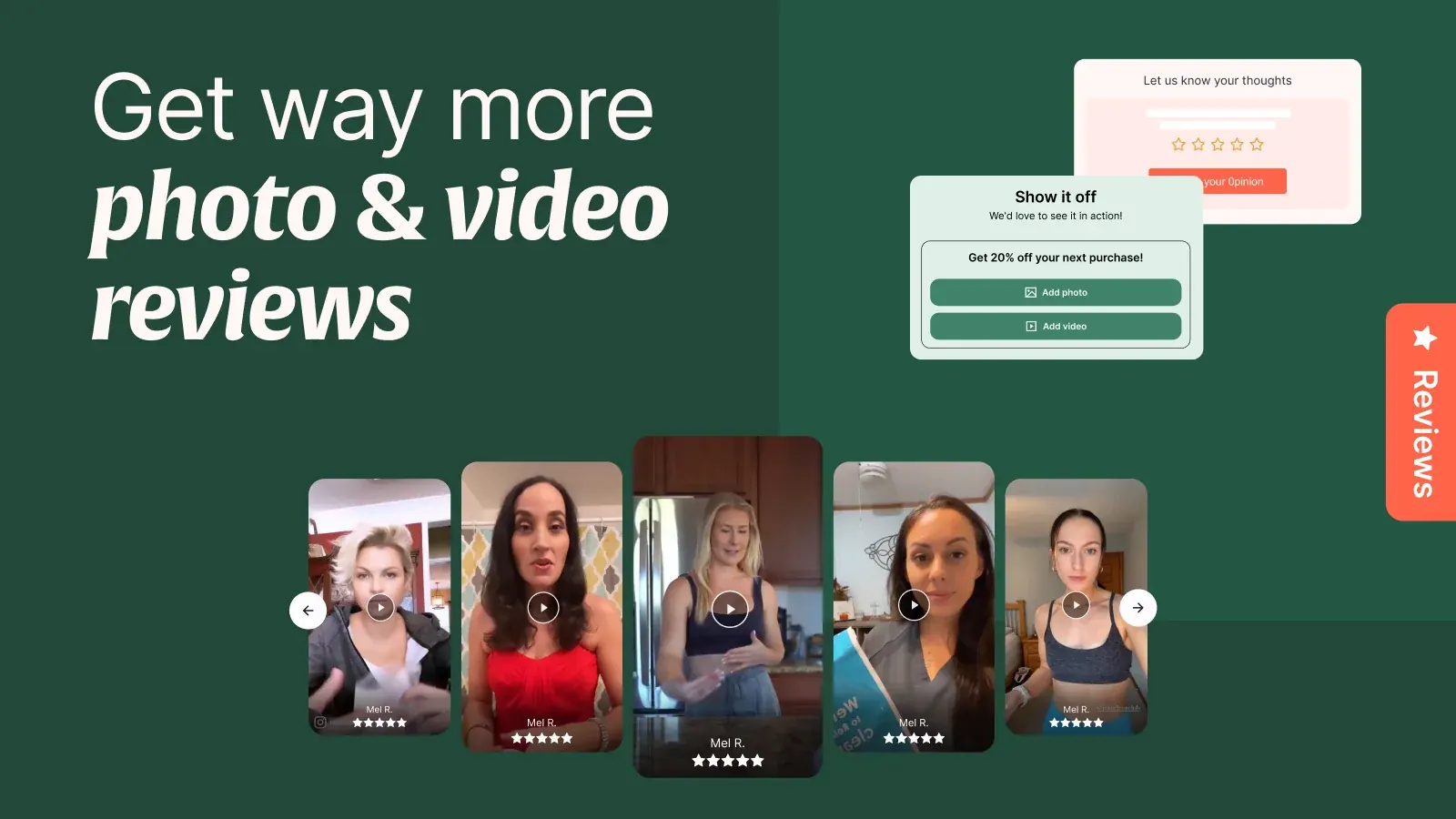
Introduction. Loox builds the best-looking photo and video galleries in the category, and for an Instagram-era brand that look does real work on the product page. It carries the Built for Shopify badge and a 4.9 rating from nearly 10,000 reviews. The trade-off is order-based billing that climbs with your success.
Features.
- Photo and video review galleries with polished, customizable widgets
- Automated review request emails
- Photo and video incentives (discount for a media review)
- Referrals and post-purchase upsells
- Google Shopping and rich snippets
Pricing. Free Beginner plan displays reviews for stores up to 500 orders; Convert $49.99/month (includes 300 orders, then $50 per additional 300); Unlimited $299.99/month.
Best for. Brands selling visual products that convert on social proof and are not yet at the order volume where the order-based bill bites. At scale, you move to Unlimited or reconsider a flat-fee app.
3. Okendo
Introduction. Okendo collects more than a star rating. Its structured review attributes feed Klaviyo segments, which is why retention-focused DTC brands pick it. It holds 4.8 stars from more than 1,400 reviews.
Features.
- Review attributes (fit, quality, and custom questions) that produce structured data
- Photo and video reviews
- Deep Klaviyo data sync and segmentation
- AI review summaries and keywords (Growth plan)
- Q&A, moderation, and Google rich snippets
Pricing. Free up to 50 orders; Essential $19/month (up to 200 orders); Growth $119/month (up to 1,500); Power $299/month (up to 3,500). The jump from $19 to $119 happens the moment you pass 200 orders a month.
Best for. A brand doing a few hundred to a couple of thousand orders that already lives in Klaviyo and will use the attribute data. Below 200 orders, cheaper apps do the core job; above 3,500, you are into custom pricing.
4. Yotpo
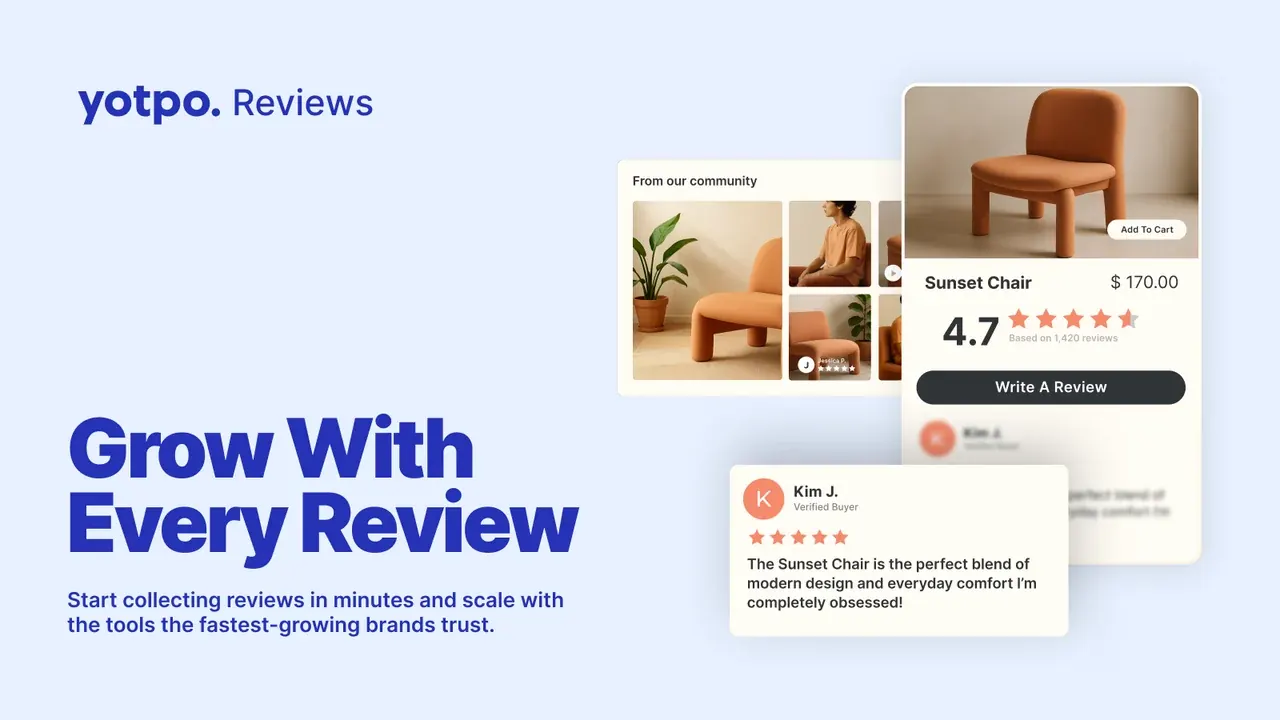
Introduction. Yotpo is the most featured reviews platform here, with the integrations and reporting a larger brand expects. It holds 4.8 stars from more than 4,600 reviews. Its product scope has shifted over the years, so older guides describing it as a bundled SMS-and-email suite are out of date.
Features.
- Product reviews with photo and video
- Automated review requests
- Google rich snippets and Google Shopping product ratings
- Google Seller Ratings and custom questions (Pro plan)
- AI review summaries and smart sorting
- Broad integrations and reporting
Pricing. Free up to 50 orders; Starter $15/month; Pro $119/month. Paid tiers scale with order volume.
Best for. A brand with the order volume and the team to use advanced features. A small store pays for capability it never turns on, which is why most stores reading this should look at Judge.me or Junip first.
5. Junip
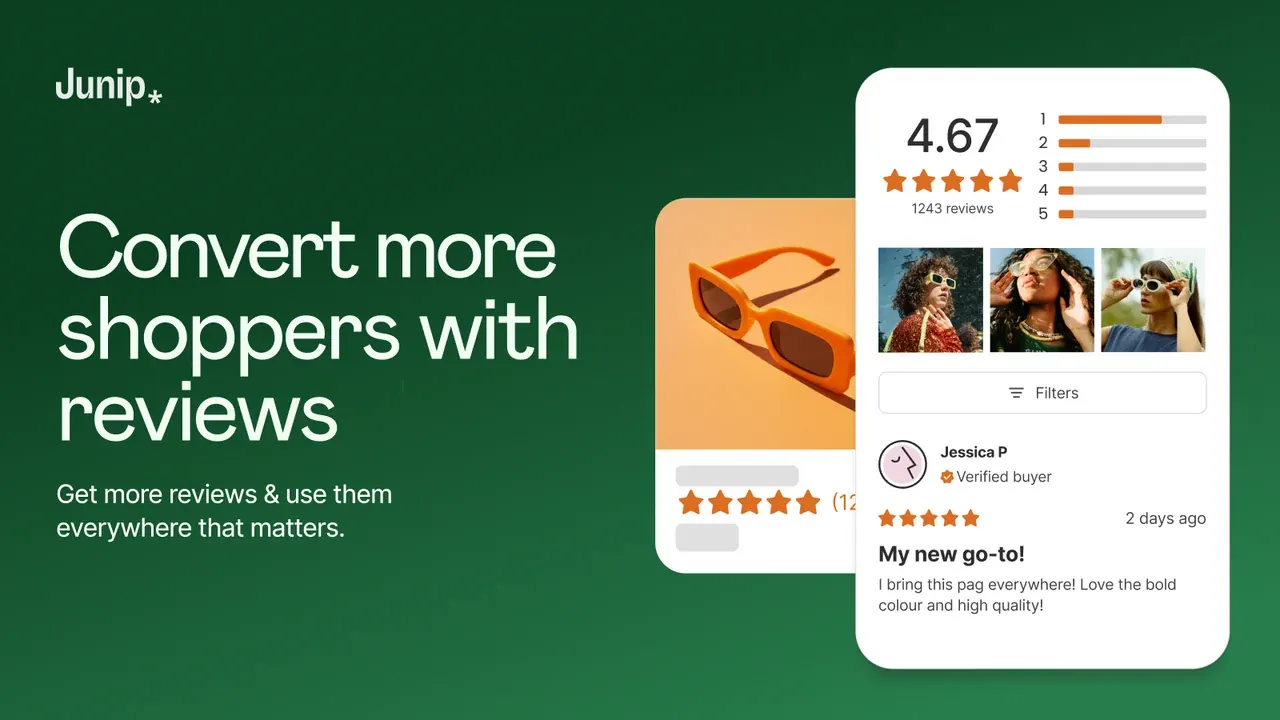
Introduction. Junip pairs a clean review experience with pricing that does not move when your orders do. Every tier, free included, allows unlimited orders and requests, so you choose a plan by feature, not by traffic. It carries the Built for Shopify badge and 4.8 stars from more than 1,100 reviews.
Features.
- Unlimited review requests and mobile-first submission
- Photo and video reviews
- Product-page widgets and rich snippets
- Google Shopping, TikTok Shop, and Shop syndication (Growth plan)
- Klaviyo and Postscript marketing integrations (Growth plan)
- Multi-store management and API access (Premium plan)
Pricing. Free (unlimited orders and requests); Core $29/month; Growth $79/month; Premium $299/month. A store doing 1,000 orders pays the same $79 as one doing 100.
Best for. A store that expects to grow and wants to lock its cost now. The feature set is focused rather than sprawling, which fits most stores and limits ones that need Yotpo-level depth.
6. REVIEWS.io
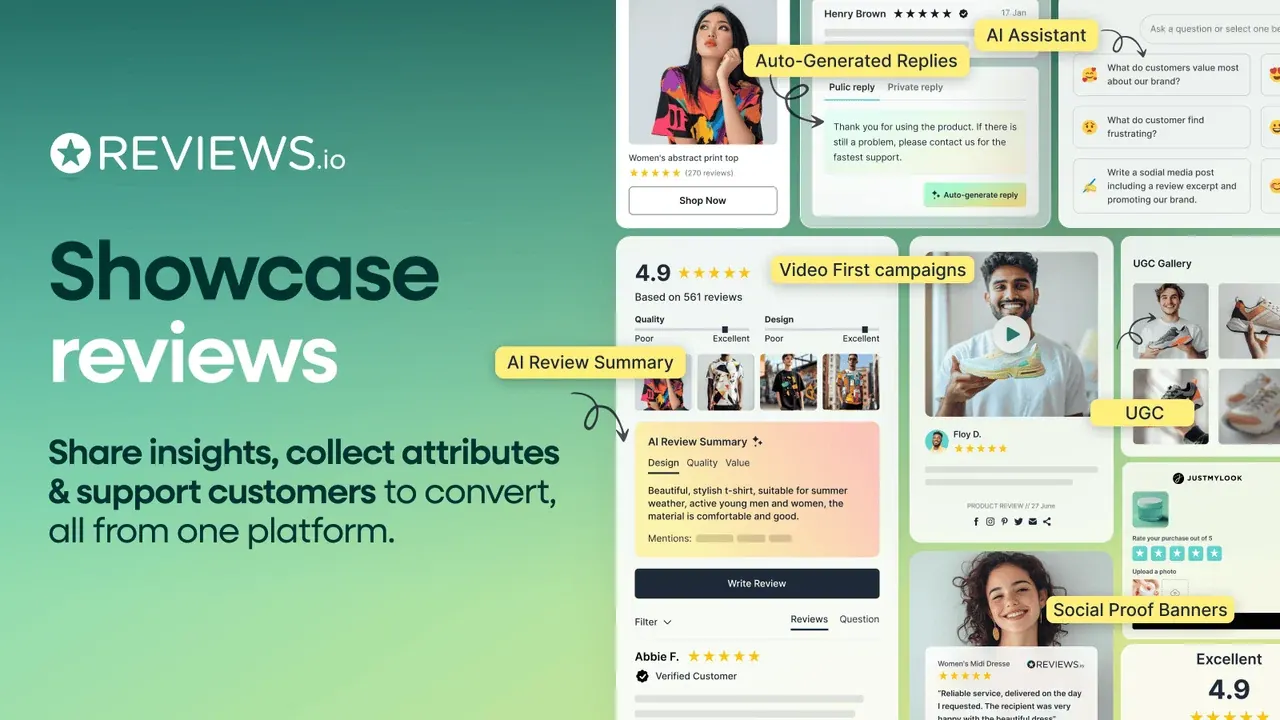
Introduction. REVIEWS.io is one of the few apps that collects both product reviews, which sit on the product page, and company reviews, which build a Trustpilot-style reputation profile and can feed Google Seller Ratings. It holds 4.7 stars from more than 750 reviews.
Features.
- Product reviews and company/seller reviews in one tool
- Photo and video reviews
- Automated review invitations
- Google rich snippets and Seller Ratings eligibility
- On-site widgets and customer surveys
Pricing. Free (25 invites, both product and company reviews); Launch $19/month (50 invites); Launch Plus $45/month (500 invites). Billed by review invitations. One recent App Store review claims the listed prices have since risen, so confirm the current invite tiers on the listing before you commit.
Best for. A brand that wants seller reputation and product reviews from one vendor. If you only need on-site product reviews, a single-purpose app is simpler.
7. Stamped
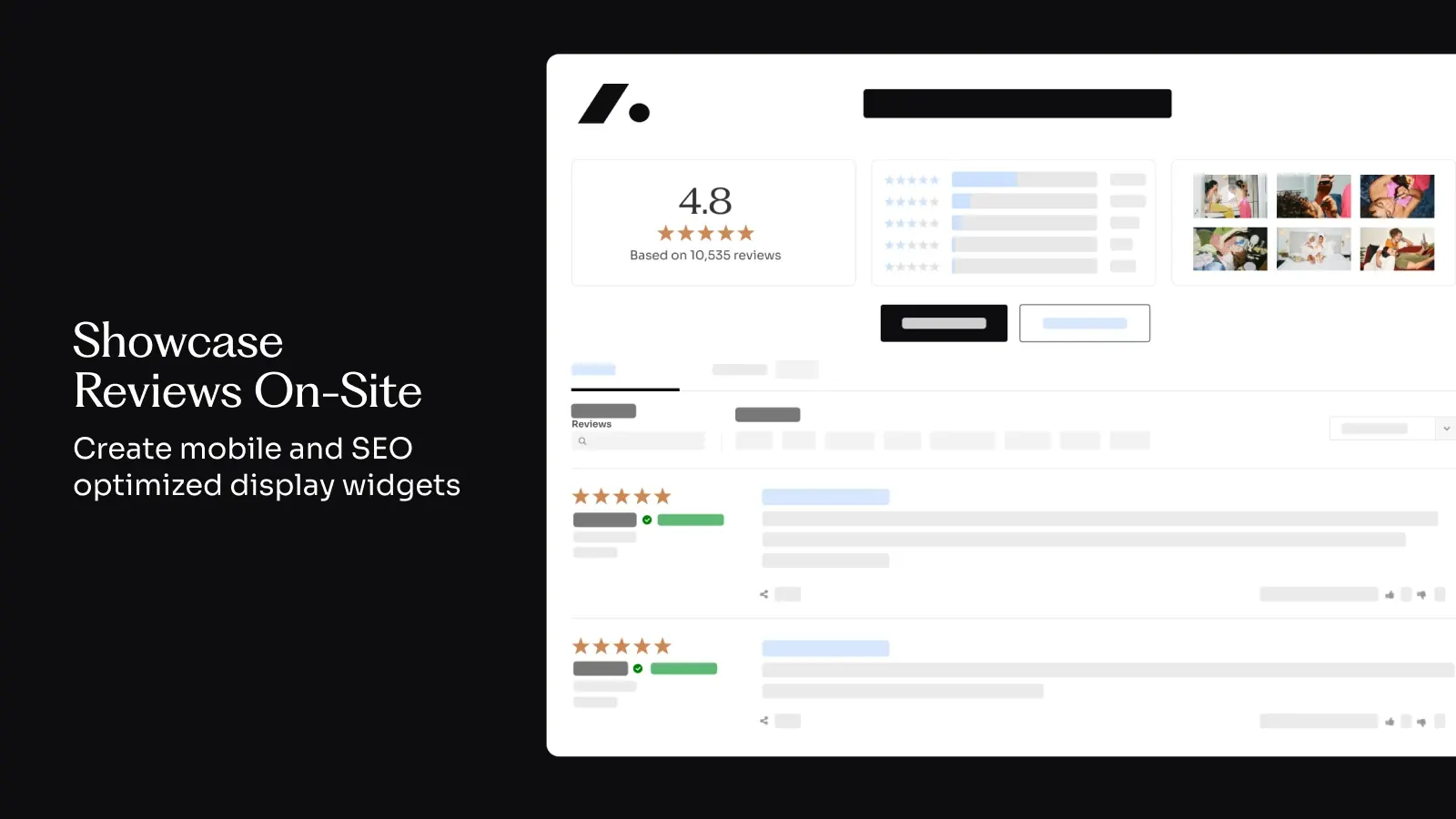
Introduction. Stamped pairs reviews with loyalty and other retention modules, which is its reason to exist next to the single-purpose apps. It holds 4.7 stars from more than 3,700 reviews, one of the larger install bases here.
Features.
- Product reviews with photo and video
- Automated review requests by email and SMS
- Q&A and net promoter surveys
- Loyalty program (separate subscription)
- Google rich snippets and marketing integrations
Pricing. No permanent free plan; Stamped removed its free Lite tier in 2025. Reviews plans run Basic $19/month (up to 200 orders), Premium $39 (up to 500), Business $99 (up to 1,500), and Professional $249 (up to 3,500), billed by order band with no overage fees. Loyalty is billed separately.
Best for. A store consolidating reviews and loyalty that is past the free-tool stage. If you want reviews alone, cheaper specialists do that one job.
8. Fera
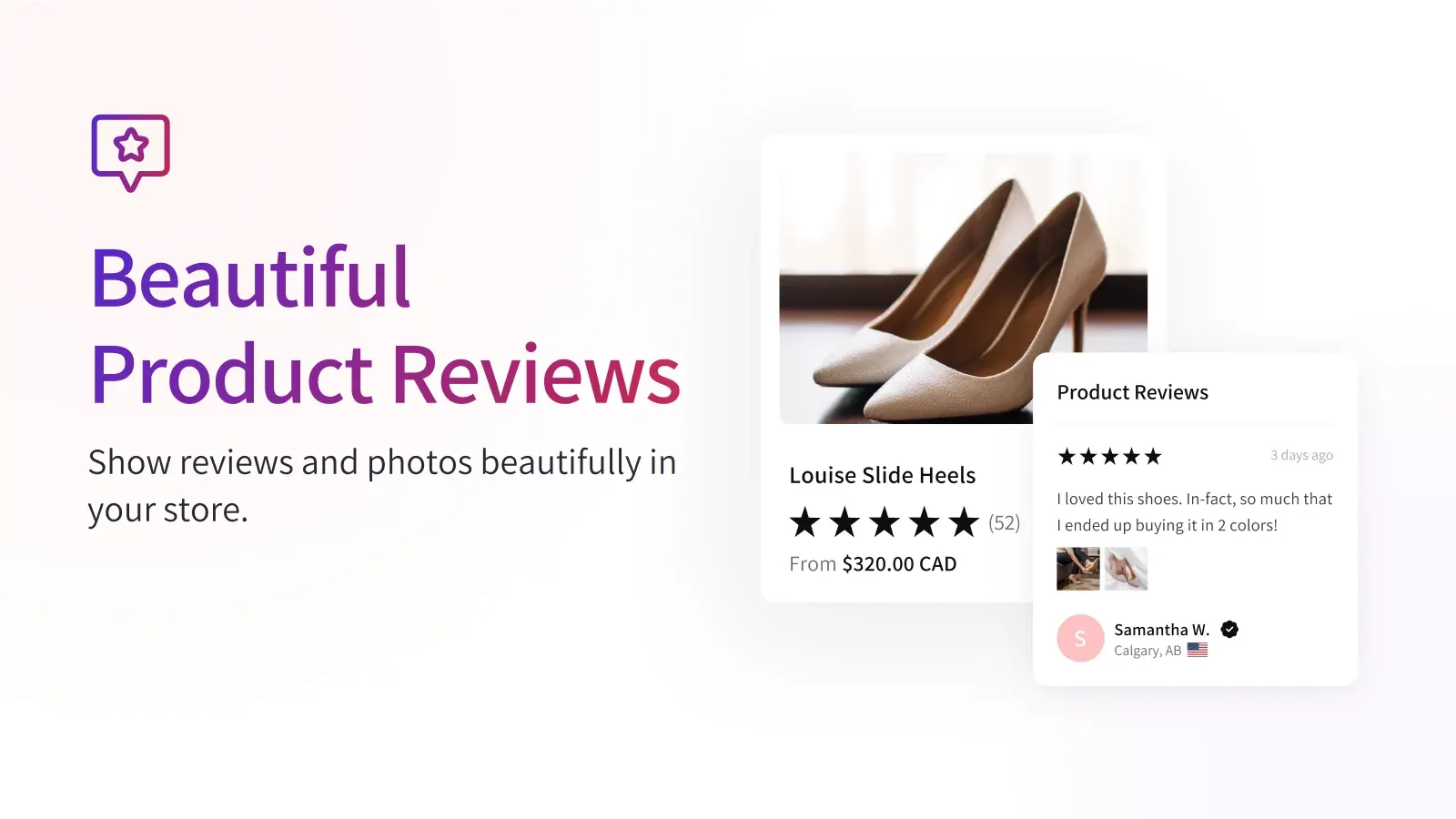
Introduction. Fera is the flexible-display pick. It imports and displays reviews from several platforms and gives fine control over how widgets look. It holds 4.8 stars from more than 2,000 reviews. Older guides describing a free plan are out of date, which was the most-confused data point in this category.
Features.
- Import and display reviews from multiple platforms
- Photo and video reviews
- Fine-grained widget customization
- Automated review requests
- Discounts and incentives, plus moderation
Pricing. No permanent free plan; Fera moved to a 60-day free trial in 2025. Paid plans start at Startup $9/month (100 review requests, up to 200 orders), then Small $29 (1,000 requests), Medium $99, and up. Billed on both review requests and orders.
Best for. A store that wants to shape the review display precisely or pull reviews from more than one platform, and will use the long trial to test before paying.
9. Opinew
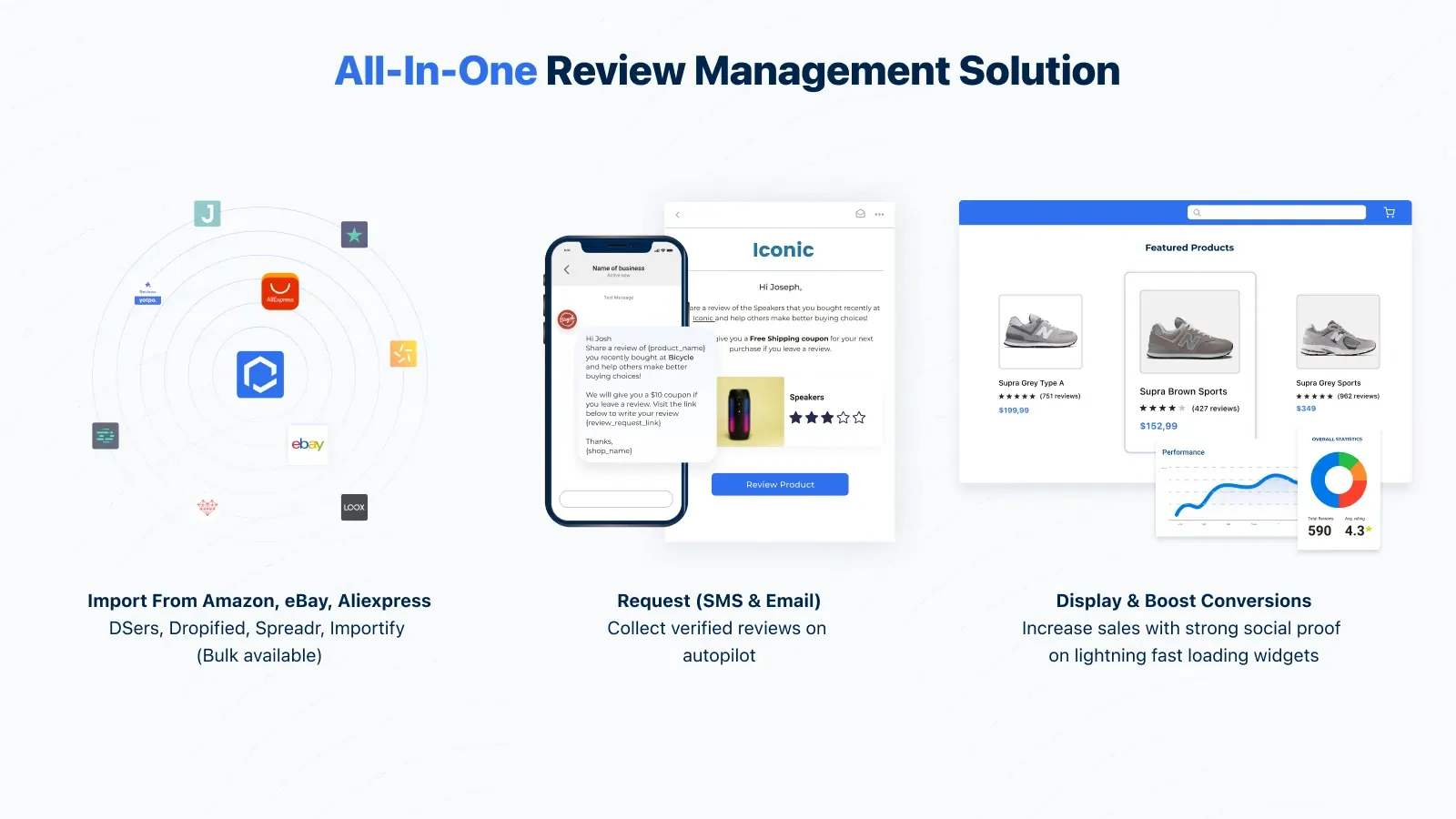
Introduction. Opinew’s job is import. It pulls reviews, with photos and video, from the major marketplaces, which is exactly what a dropshipping or marketplace-crossover store needs to seed a new product page. It holds 4.7 stars from more than 600 reviews.
Features.
- Bulk review import from Amazon, AliExpress, and eBay (with media)
- Automated review request emails
- Photo and video reviews
- On-site widgets
- Smart request and reminder flows
Pricing. Free (100 imports, 50 email requests); Starter $19/month (500 imports); Growth $89/month (5,000 imports); Advanced $199/month (50,000 imports). Billed by import allowance and requests.
Best for. A store launching products that already have reviews elsewhere. See the dropshipping section for the honesty question that comes with imported reviews.
10. Rivyo

Introduction. Rivyo is a low-cost product-review app that doubles as a light retention tool, pairing reviews with optional loyalty and referral add-ons. It imports reviews from the major marketplaces, carries the Built for Shopify badge, and holds 4.9 stars from more than 940 reviews. Its paid tiers top out at $19, which makes it one of the cheapest full-featured options in this guide.
Features.
- Product and store reviews with photos and video
- Review import from Amazon, AliExpress, and Etsy, plus CSV and migration from Judge.me, Yotpo, Loox, and Okendo
- Automated review request and reminder emails, with review-booster campaigns
- Google rich snippets and Google Shopping integration (Business plan)
- Review rewards via coupon codes, Q&A, and QR-code review collection
- AI Review Autopilot, video reviews, and checkout reviews for Plus stores (Enterprise plan)
- Optional add-ons: Customer Loyalty Program ($29/month) and Referral Rewards ($19/month)
Pricing. Free to install ($0, up to 100 orders a month, 100 marketplace imports, unlimited product reviews); Starter $9/month (up to 500 orders, photo reviews, 500 imports); Business $14/month (up to 1,000 orders, review rewards, Google Shopping, 1,000 imports); Enterprise $19/month (unlimited orders and emails, video reviews, AI, API, unlimited imports). Billed by monthly order volume, with import caps by tier.
Best for. A budget store that wants reviews, marketplace import, and the option to bolt on loyalty later, all from one Built for Shopify app. The loyalty and referral programs cost extra, so price those in if you plan to use them.
11. Air Reviews
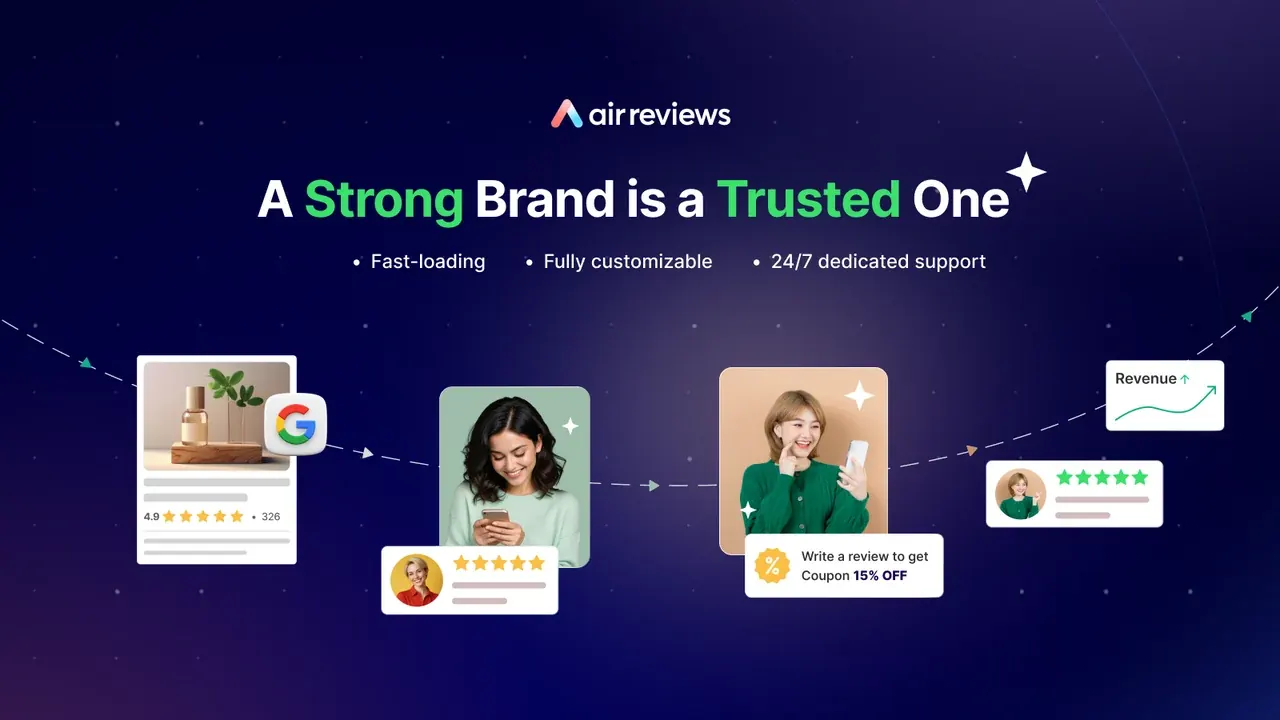
Introduction. Air Reviews is a well-rated budget option with a tidy photo-review display and a genuinely usable free plan. It holds 4.9 stars from more than 3,100 reviews, a strong score for a low-cost app.
Features.
- Photo and video reviews with customizable widgets
- Import from AliExpress and Amazon
- Review rich snippets
- Review discounts and incentives
- AI review summaries (Advanced plan)
- Klaviyo and Joy Loyalty integrations
Pricing. Free ($0, unlimited orders and 50 review requests a month); Pro $12.90/month (250 requests, customizable widgets, rich snippets); Advanced $29.90/month (unlimited requests, AI summaries). Billed by review requests.
Best for. A newer store that wants a good-looking widget without paying for a full platform.
12. Trustoo
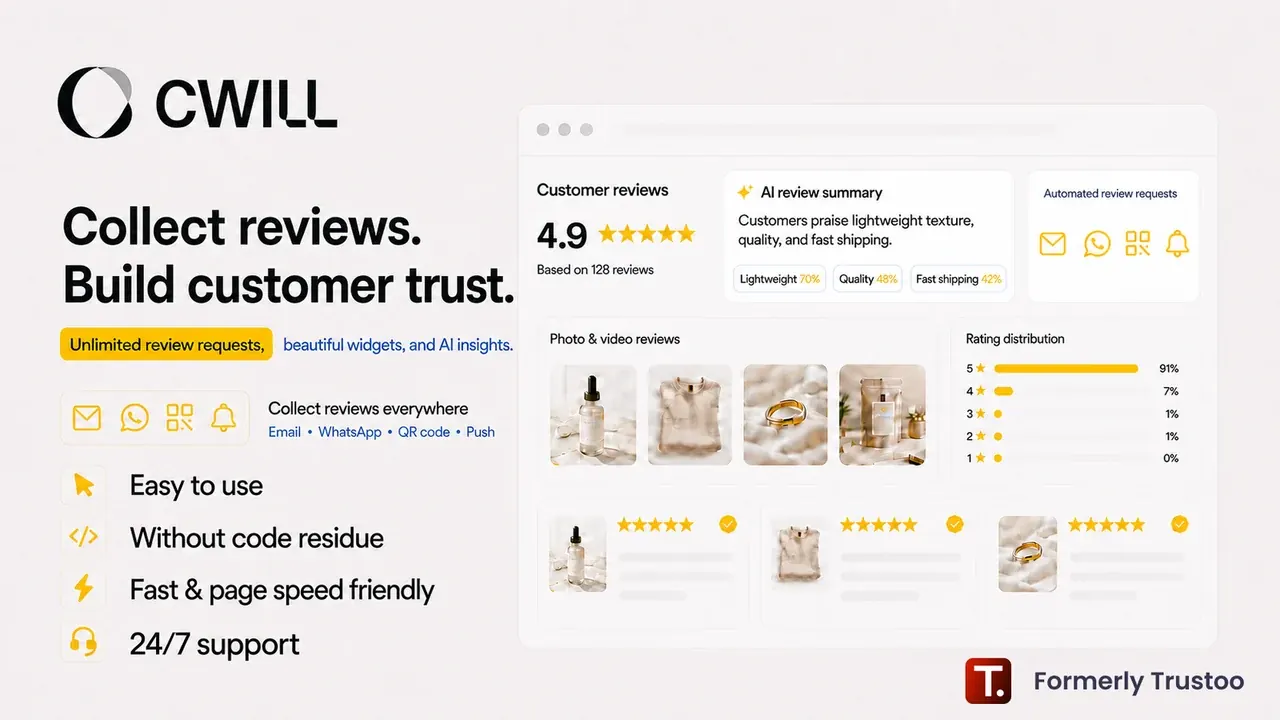
Introduction. Trustoo, also listed under the CWILL name, is another budget visual-review app, with a strong App Store rating around 5.0. Its free tier does not cap total reviews, which is unusual at this price.
Features.
- Photo and video reviews
- Unlimited reviews on the free plan
- Automated review request emails
- On-site widgets
- Review discounts
Pricing. Free ($0, unlimited reviews); Basic $9.99/month (150 review requests); Growth $24.99/month (600 requests). Billed by review requests. Confirm any video gating on the free tier before relying on it.
Best for. A small store wanting photo reviews cheaply, with a free tier that does not limit how many reviews you hold.
13. Klaviyo Reviews
Introduction. Klaviyo Reviews is the native reviews product from the email and SMS platform. If Klaviyo already runs your marketing, it keeps review data in the same place your flows live, with no extra integration to maintain. It holds 4.8 stars from a smaller base of 233 reviews, reflecting that it is newer.
Features.
- Native Klaviyo integration: review data in flows and segments
- Automated review requests by email and SMS
- Custom questions and unique coupon rewards
- Import of existing reviews
- Review-request timing based on delivery (paid plan)
Pricing. Free (up to 50 orders); Reviews $25/month (up to 250 orders), scaling with order volume.
Best for. A Klaviyo-native store that values one less integration over the deepest review feature set.
14. Growave
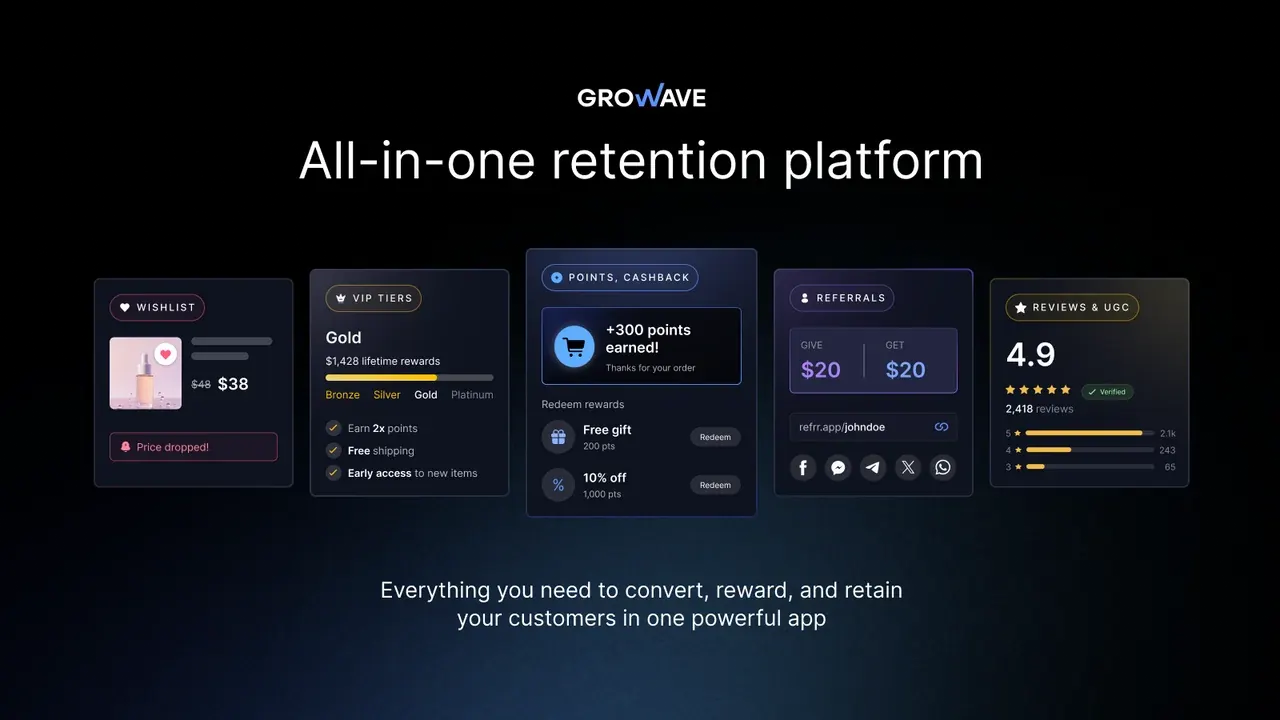
Introduction. Growave bundles three jobs, reviews, a loyalty points program, and a wishlist, into one app on a single bill. The free plan genuinely includes all three up to 200 orders. It carries the Built for Shopify badge and 4.8 stars from nearly 1,300 reviews.
Features.
- Product reviews with photos
- Loyalty and rewards points program
- Wishlist
- Automated review requests
- Google rich snippets
Pricing. Free (up to 200 orders, all three tools); Entry $15/month (up to 500 orders, then $20 per 100); Growth $199/month (up to 1,500); Plus $499/month (up to 3,000). The order bands and per-100 overages mean the bill climbs with volume, so price it at your real order count.
Best for. A store that wants loyalty and reviews together. If you only need reviews, a specialist app is cheaper and deeper.
15. Vitals
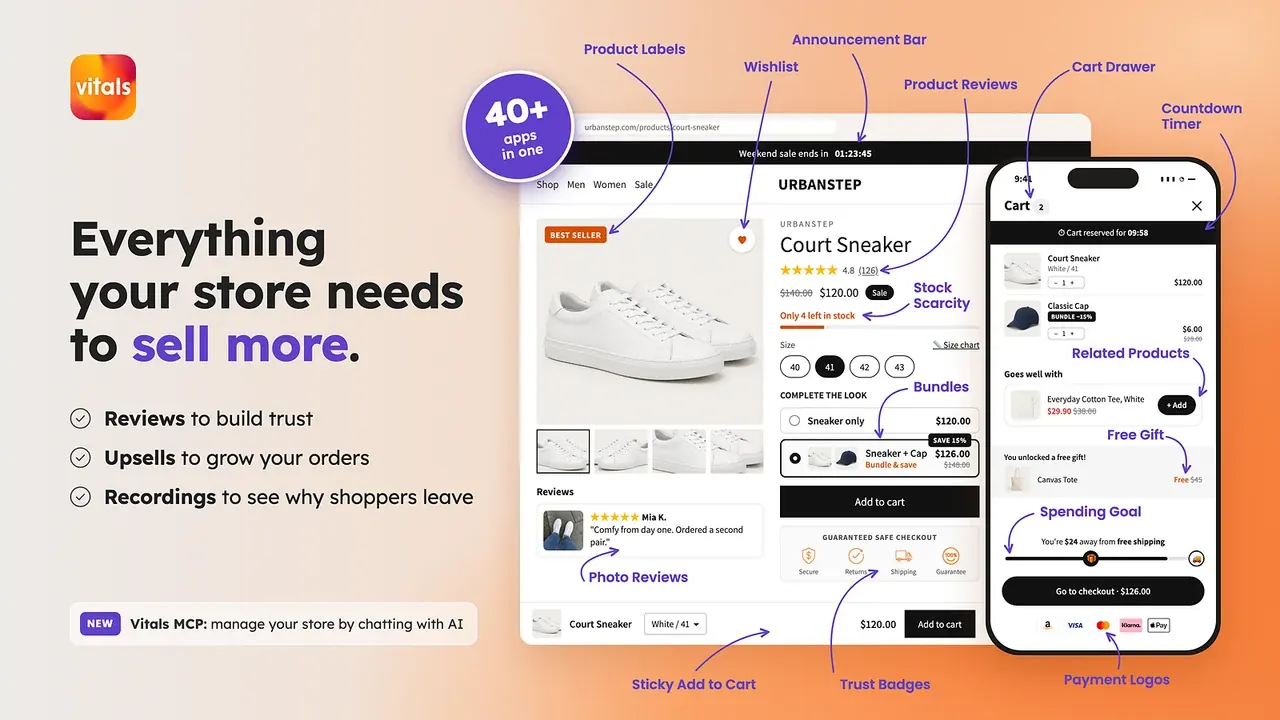
Introduction. Vitals is not really a review app, it is a conversion suite that includes reviews alongside 40-plus other tools for one flat fee. For a store that would otherwise install five apps, that is a strong deal. It carries the Built for Shopify badge and 4.9 stars from nearly 3,000 reviews.
Features.
- Product reviews with import and photo reviews
- Bundles and upsells
- Visitor session recordings
- 40-plus additional conversion tools in one app
- Single flat subscription
Pricing. $29.99/month flat for the All-in-One plan (reviews plus 40-plus tools), with usage fees above roughly $1,000/month in attributed sales.
Best for. A store that wants many conversion tools from one vendor. If you want the best reviews specifically, a dedicated app does that one job better.
What you actually pay at 100 to 5,000 orders
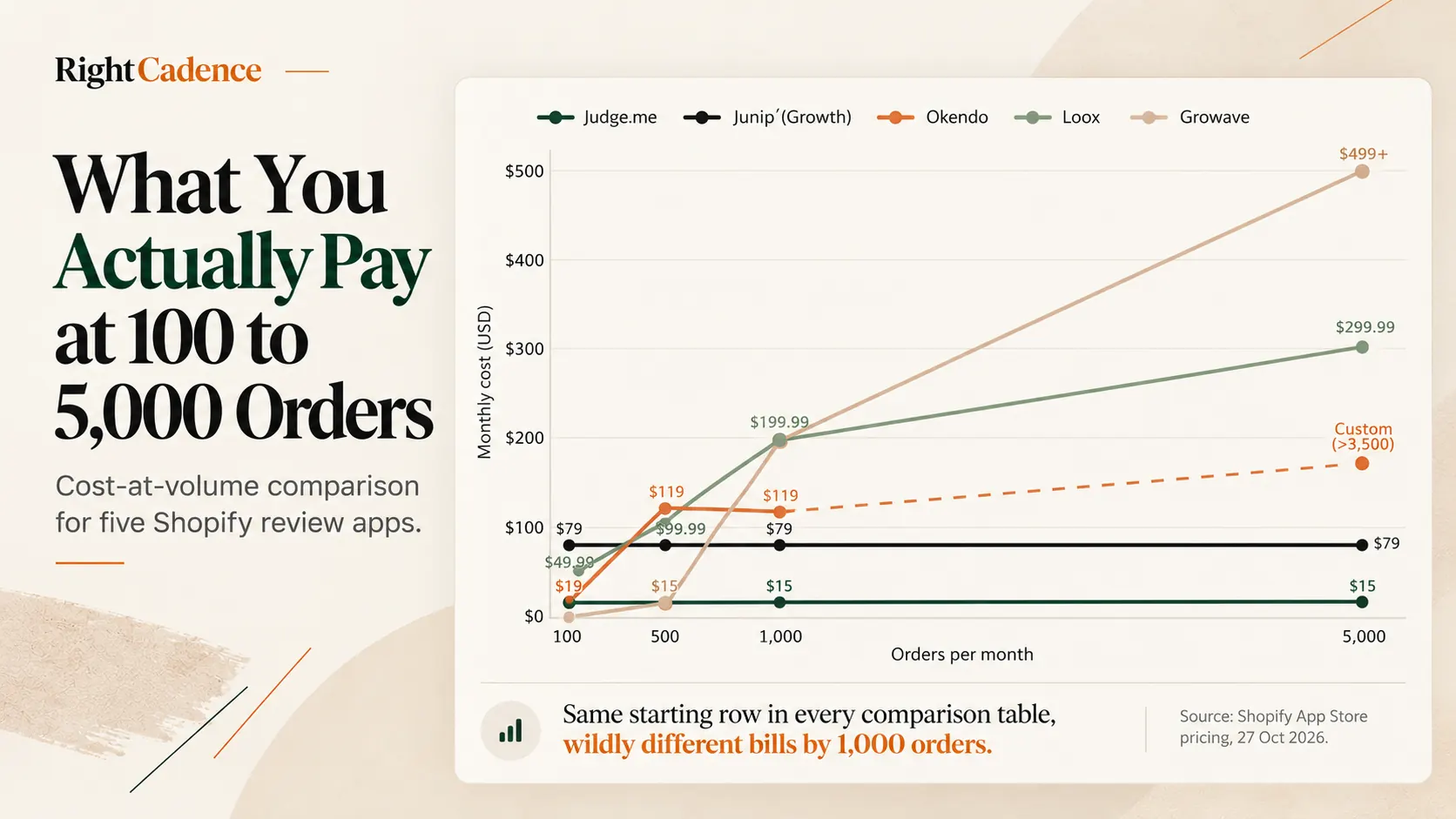
This is the table the starting prices hide. These five apps appear in every comparison with similar-looking entry prices. Here is the monthly cost of each at four store sizes, using the billing models verified on 27 October 2026.
| Orders/month | Judge.me (flat) | Junip (Growth, flat) | Okendo (order band) | Loox (order-billed) | Growave (order band) |
|---|---|---|---|---|---|
| 100 | $15 | $79 | $19 | $49.99 | Free |
| 500 | $15 | $79 | $119 | $99.99 | $15 |
| 1,000 | $15 | $79 | $119 | $199.99 | $199 |
| 5,000 | $15 | $79 | Custom (>3,500) | $299.99 (Unlimited) | $499+ |
Read it across the rows and the point is obvious. Judge.me and Junip are flat lines. Okendo, Loox, and Growave are ramps. At 100 orders, Judge.me and Growave look expensive next to nobody; by 1,000 orders, the order-billed apps cost three to thirteen times as much as Judge.me for the same core job.
This does not make Judge.me automatically correct. Growave is bundling a loyalty program and a wishlist into that bill, and Okendo is giving you Klaviyo-ready review attributes that Judge.me does not. You are paying more for more. The table’s job is to make you ask whether you will use the extra, because if you will not, you are buying a rising bill for features you ignore.
Pro tip: Model the bill at next year’s order volume, not this month’s. The app that is $15 cheaper today can be $180 more expensive the month you have a good quarter.
Free plans: what you get and where they stop
Several free plans are good enough to run a real store on, and a few are demos. The difference is what they cap.
- Genuinely full: Judge.me and Junip. Judge.me’s free plan has unlimited reviews, photos, and video. Junip’s free plan allows unlimited orders and requests. Both are real tools, not trials.
- Capped by orders: Okendo, Yotpo, Klaviyo Reviews (50 orders), Growave (200 orders), Loox (500 orders, display only). Fine while you are small, a forced upgrade once you grow.
- Capped by volume of use: Opinew (100 imports, 50 requests), REVIEWS.io (25 invites), Air Reviews (50 requests), Rivyo (100 orders, 100 imports), Trustoo (unlimited reviews, limited requests). The free tier is a working sample sized for a new store.
- No longer free: Stamped and Fera. Both removed their permanent free plans in 2025 and now offer only a free trial, so a budget-first store should look elsewhere.
The honest read: if budget is the deciding factor, Judge.me’s free plan does more than most stores need, and you can stay on it indefinitely. The paid upgrade buys convenience and integrations, not the ability to collect and show reviews.
Photo and video reviews
Photo and video reviews convert better than text alone because they are harder to fake and easier to trust, and in 2026 they are close to table stakes. The apps differ on how the media looks and how hard they push customers to submit it.
- Best-looking galleries: Loox. Its visual display is the category benchmark, which is most of why visual brands pay its order-based price.
- Unlimited media on the free plan: Judge.me. Photo and video are included free, with no media cap, which is rare.
- Incentivized media: Loox, Judge.me, Air Reviews. Offer a discount for a photo or video review to lift submission rates.
Pro tip: Turn on a small post-review incentive for photos, usually a 5 to 10 percent coupon on the next order. It raises your photo-review rate and the coupon only fires after the review is submitted, so it pays for itself in repeat orders.
Dropshipping and imported reviews
If you are launching products that already have reviews on Amazon or AliExpress, import apps like Opinew and Rivyo let you pull those reviews, with photos, onto your product page so a new listing does not sit at zero reviews.
This works, and it comes with a real decision. Imported marketplace reviews are not reviews of your store, and displaying them as if they were is the kind of thing that erodes trust when customers notice, and can run into advertising-standards rules on misleading reviews. The defensible approach is to label imported reviews as sourced from the marketplace, use them to seed a page, and replace them over time with reviews from your own verified buyers. An import app is a launch tool, not a permanent substitute for real customer feedback.
Google stars and rich snippets: eligibility vs guarantee
A review app can make your store eligible for star ratings in Google, but no app guarantees the stars appear. This is the claim to be careful with, because several guides imply a review app buys you Google stars. It does not, and understanding why saves you from choosing an app on a promise it cannot keep.
There are three separate systems, with different requirements:
- Product rich results. The stars that can appear under a product in organic search. Your app adds review structured data to the page, which makes you eligible. Google decides whether to show it. Most serious review apps (Judge.me, Loox, Okendo, Yotpo, Junip) output this schema.
- Google Shopping product ratings. The stars on Shopping ads and listings. These come through Merchant Center and often require the app to be an approved ratings partner. Check the app’s listing for Google Shopping support specifically. Judge.me (paid), Yotpo, Junip (Growth), and others name it explicitly.
- Google Seller Ratings. Stars for your store, not your products. These come from company or seller reviews, not product reviews, which is where an app like REVIEWS.io that does both earns its place.
Pro tip: If Google Shopping stars matter to you, confirm the app is a Google review partner before installing, not after. Schema on the page is necessary but not sufficient, and the partner status is the part that is easy to miss.
Product reviews vs company reviews
Product reviews and company reviews do different jobs, and most apps only do the first. A product review sits on the product page and helps someone decide to buy that item. A company review, the Trustpilot style, is about your store as a whole and can feed Google Seller Ratings.
Most apps in this guide collect product reviews. REVIEWS.io is the clearest option that collects both. If you want store-level reputation as well as product social proof, that is the distinction to buy on. Running two separate tools for the two jobs is possible, but watch for duplicate review requests to the same customer and overlapping schema on the page.
How to add reviews to your Shopify store
The mechanics are the same for every app here, and the whole setup takes under an hour.
- Install the app from the Shopify App Store. It connects to your store automatically.
- Add the review widget to your product page. On a 2.0 theme, open the theme editor, go to a product template, and add the app’s review block where you want it, usually directly under the product title for the star summary and lower down for the full reviews. Most apps now place this with a click, no code.
- Turn on automated review requests. Set the app to email customers a set number of days after delivery. Fourteen to twenty-one days after delivery is the common window, long enough that the product has been used.
- Import any existing reviews by CSV or marketplace import, if you are moving from another tool or seeding a new store.
- Set a photo incentive if the app supports it, to lift your media-review rate.
Pro tip: Base the request timing on delivery, not on order date. A review request that lands before the box does is the fastest way to earn a one-star “where is my order.”
How to switch apps without losing your reviews
Your reviews are portable, but not all of them survive the trip, and knowing what breaks is how you avoid losing years of social proof. This is the real reason stores feel locked in, and it is mostly avoidable with one careful export.
What usually migrates cleanly: star ratings, review text, reviewer names, and product associations by SKU or handle. What often does not: photos and video, original review dates (some apps re-date imported reviews to the import day, which wrecks your “reviewed over time” credibility), verified-purchase badges, and replies to reviews.
The safe sequence:
- Export from your current app to CSV before you cancel anything. Confirm the export includes review dates and image URLs, not just text and stars.
- Check that image files export, not just links. Some exports give you URLs that die when you close the account.
- Import into the new app and map fields carefully, especially the review date, so your history stays intact.
- Spot-check your best products for photos, dates, and verified badges before you uninstall the old app.
- Keep the old app installed for a week after the switch, so you can re-export if something is missing.
Once your reviews are migrating cleanly, the feedback is worth feeding into your post-purchase and reorder emails, where it does a second job. Keep the review app’s request events separate from the replenishment and win-back events your retention tool handles, so customers are not getting a review ask and a reorder nudge in the same breath. If you run on Klaviyo, Omnisend, Attentive, or Postscript, check which tools your retention stack integrates with before you pick the review app, since a native connection saves a migration later. And if you are moving stores or consolidating data, import your store data without breaking it first.
Pro tip: Do the export the day you start evaluating a new app, not the day you cancel the old one. A clean export is the one thing you cannot get back after the account closes.
Choose for your store: an 8-question decision tree
Answer these in order. The first one that clearly describes you points to your shortlist.
- Are you on a tight budget or just starting? Judge.me’s free plan does the full job. Stay there until you have a reason to leave.
- Is your brand visual, and does the photo wall sell the product? Loox, or Air Reviews if budget is tight.
- Do you run Klaviyo and want review data in your segments? Okendo, or Klaviyo Reviews if you want it native.
- Do you expect to grow fast and want a flat bill? Junip, or Judge.me. Avoid order-billed apps.
- Do you need to import reviews from Amazon or AliExpress? Opinew or Rivyo, as a launch tool.
- Do you want reviews and a loyalty program in one app? Growave.
- Do you need company reviews and Google Seller Ratings, not just product reviews? REVIEWS.io.
- Do you want many conversion tools from one vendor? Vitals.
If two answers fit, choose by the cost-at-volume table. At your real order count, the cheaper-to-grow option is usually the right call.
FAQ
What is the best free Shopify review app?
Judge.me is the best free review app for most stores. Its free plan includes unlimited reviews, unlimited photo and video, on-site widgets, and Google reviews sync, with no order cap, so a store can run on it indefinitely. Junip is the strongest free alternative, with unlimited orders and requests on its free tier.
How much do Shopify review apps cost?
Most start free and paid plans run from about $15 to $300 a month. The real cost depends on how the app bills. Flat-fee apps like Judge.me stay at $15 regardless of size, while order-billed apps like Loox and Okendo start lower and climb with your monthly orders, so a store doing 1,000 orders can pay anywhere from $15 to $200 for similar core features.
Will a review app get me star ratings in Google?
A review app makes you eligible for Google stars, it does not guarantee them. The app adds review structured data to your pages, which is what Google needs to consider showing stars, but Google decides whether they appear. Product rich results, Google Shopping ratings, and Google Seller Ratings are three separate systems with different requirements.
Can I move my reviews to a different app without losing them?
Yes, star ratings and review text migrate cleanly by CSV, but photos, review dates, and verified-purchase badges often do not. Export from your current app before canceling it, confirm the export includes image files and original dates, then import and spot-check your top products before uninstalling the old app.
Is the Shopify Product Reviews app still available?
No, Shopify retired its own Product Reviews app in 2024, and it is no longer installable. It is not the same as Shop reviews, which is a separate system. Any 2026 guide recommending the old Product Reviews app is out of date, so choose one of the third-party apps in this guide instead.
Should I use imported reviews from AliExpress or Amazon?
Imported marketplace reviews are useful for launching a new product page, but they are not reviews of your store and should be labeled as sourced from the marketplace. Use them to avoid a zero-review page at launch, then replace them over time with reviews from your own verified buyers to keep the social proof honest and compliant.
The bottom line
For most Shopify stores, Judge.me is the right first install: its free plan is genuinely complete and its paid plan is a flat $15 that never punishes you for growing. From there, pick on the job you actually need, visual galleries (Loox), Klaviyo data (Okendo), flat pricing at scale (Junip), or reviews bundled with loyalty (Growave), and price it at next year’s order volume, not this month’s.
Whatever you choose, the reviews you collect are worth more than social proof on a product page. Fed into your post-purchase and reorder emails, they tell you which customers are happy enough to ask for a second order. That is where CPG brands quietly lose or keep revenue between orders.